
Nitenpyram vs Imidacloprid: Which Insecticide Is Better for Pest Control
2026-03-16 13:50:53
Among modern crop protection tools, neonicotinoid insecticides remain one of the most widely used chemical classes for controlling piercing-sucking insect pests. Within this group, two well-known active ingredients—nitenpyram insecticide and imidacloprid insecticide—are often discussed together because they share a similar biochemical target while showing noticeably different performance profiles in practical use.
The comparison of nitenpyram vs imidacloprid frequently arises in discussions about pest-control strategies for both agricultural and veterinary applications. Although both compounds interact with insect nicotinic acetylcholine receptors, their real-world behavior differs in several important aspects, including speed of action, persistence, and typical application scenarios.
In simplified terms, nitenpyram insecticide is commonly associated with extremely rapid knockdown of target insects, while imidacloprid systemic insecticide is better known for broader agricultural use and longer residual protection in crop environments. These distinctions explain why the two active ingredients are often selected for different purposes even though they belong to the same chemical family.
Understanding how these compounds differ—in chemistry, biological activity, and practical performance—helps clarify the strengths of each product in modern pest management programs. A detailed comparison of nitenpyram vs imidacloprid insecticide performance therefore requires examining their chemical characteristics, mode of action, and observed efficacy in real pest-control situations.

Overview of Nitenpyram
Chemical Characteristics
Nitenpyram insecticide is a neonicotinoid compound known for its rapid insecticidal activity and high water solubility. Chemically, it belongs to the chloronicotinyl class of insecticides and functions as a neurotoxin that interferes with signal transmission in the insect nervous system.
In technical form, nitenpyram active ingredient is typically supplied as a crystalline powder with high purity suitable for formulation development. The molecule is characterized by its relatively fast systemic absorption and its ability to quickly affect insects that ingest or come into contact with treated material.
Because of these properties, nitenpyram systemic insecticide has gained attention as a fast-acting solution against certain sucking insects. Its chemical behavior allows it to interact efficiently with insect neural receptors, producing rapid physiological effects.
Typical Applications
In practical pest-control contexts, nitenpyram insecticide applications often focus on situations where rapid insect elimination is important. The compound is known for its strong activity against several pests including fleas, aphids, thrips, and whiteflies.
One of the most widely recognized uses is nitenpyram for flea control, where the compound is valued for its ability to kill adult fleas very quickly after exposure. This rapid activity distinguishes nitenpyram from several other neonicotinoid insecticides that may provide longer persistence but slower initial action.
In agricultural contexts, nitenpyram pest control has been used in certain crop systems—particularly protected cultivation environments—where fast suppression of sucking insects can be beneficial. While it is not always the primary choice for large-scale crop programs, its speed of action makes it useful in specific pest-management scenarios.
Overview of Imidacloprid
Chemical Characteristics
Imidacloprid insecticide is one of the earliest and most widely applied members of the neonicotinoid class. Since its introduction in the early 1990s, it has become a key active ingredient in many crop protection formulations due to its systemic behavior and broad spectrum of activity against piercing-sucking insects.
The molecule functions by interacting with insect nicotinic acetylcholine receptors, leading to overstimulation of the nervous system and eventual paralysis of the target pest. Compared with some other neonicotinoids, imidacloprid systemic insecticide is particularly valued for its ability to move within plant tissues and provide sustained protection against pests feeding on sap.
Because of this systemic property, imidacloprid pest control is commonly associated with applications where longer residual activity is beneficial. The compound can be used in multiple application methods, including seed treatment, soil application, and foliar spraying.
Typical Applications
Across global agriculture, imidacloprid for aphids, whiteflies, planthoppers, and other sucking pests has become widely established. Its ability to provide consistent protection against these insects has contributed to its long-standing role in integrated pest management strategies.
Beyond agriculture, imidacloprid has also been incorporated into some veterinary and household pest-control products. However, its strongest association remains with crop protection, where it has been used extensively in cereals, vegetables, and horticultural crops.
Because of this broad agricultural adoption, imidacloprid insecticide is often considered one of the benchmark molecules within the neonicotinoid class when evaluating systemic pest-control performance.
Mode of Action Comparison
Shared Biological Target
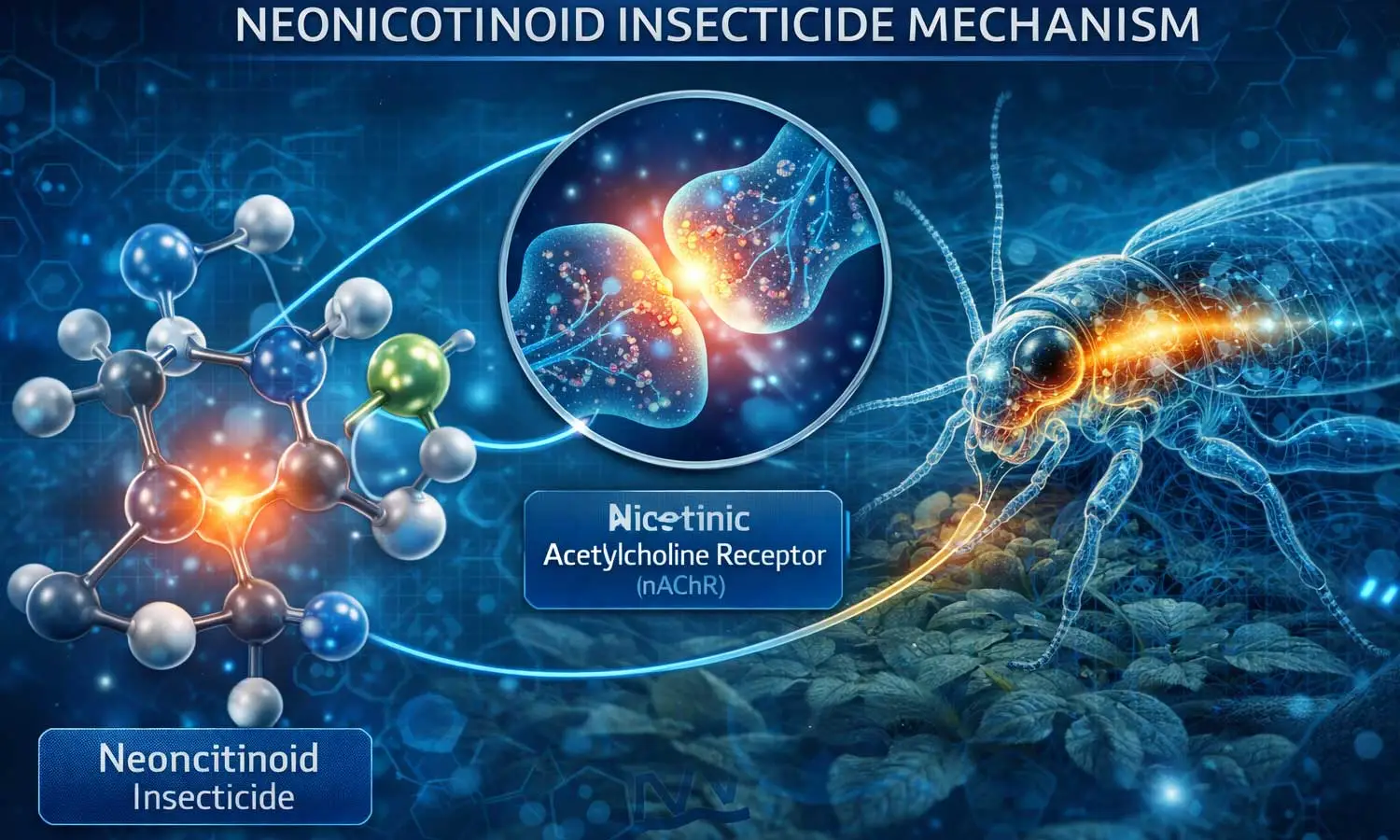
From a biochemical perspective, both compounds operate through a similar fundamental mechanism. The mode of action of nitenpyram and imidacloprid involves binding to nicotinic acetylcholine receptors (nAChRs) in the central nervous system of insects.
These receptors normally respond to the neurotransmitter acetylcholine, which regulates nerve signal transmission. When neonicotinoid insecticides bind to these receptors, they disrupt normal nerve communication and cause continuous stimulation of the insect nervous system.
This overstimulation eventually leads to paralysis and death of the insect. Because insect nicotinic receptors differ structurally from those found in vertebrates, neonicotinoids show relatively selective toxicity toward insects.
Practical Differences in Activity
Although the nitenpyram vs imidacloprid mode of action is based on the same receptor target, the observable performance of the two compounds can differ.
Nitenpyram insecticide is generally characterized by very rapid onset of activity. Once insects are exposed to the compound, neural disruption can occur quickly, leading to rapid knockdown of susceptible pests.
In contrast, imidacloprid systemic insecticide is often associated with more prolonged pest control. Its systemic movement within plant tissues and relatively longer persistence contribute to its widespread use in crop protection programs.
For this reason, comparisons of nitenpyram vs imidacloprid insecticide performance typically focus not on differences in receptor binding, but on differences in speed of action and duration of protection.
Speed of Kill and Efficacy Comparison
When comparing nitenpyram vs imidacloprid insecticide performance, one of the most important differences is the speed at which the two active ingredients eliminate target insects. Although both compounds act on insect nicotinic acetylcholine receptors, their observable speed of efficacy can differ significantly in practical applications.
Controlled studies evaluating flea infestations on cats provide a clear example of this difference. In these experiments, animals were treated with either nitenpyram insecticide or imidacloprid insecticide, and the percentage of flea mortality was measured over time.
The results showed that nitenpyram insecticide acts extremely rapidly after administration, producing near-complete elimination of adult fleas within a few hours. By contrast, imidacloprid systemic insecticide demonstrated a slower initial effect, although it continued to increase in efficacy over time.
The following table summarizes the observed speed of kill comparison between nitenpyram and imidacloprid under controlled conditions.
Speed of Kill Comparison
|
Time After Treatment |
Nitenpyram Efficacy |
Imidacloprid Efficacy |
|
1 hour |
~95.2% flea mortality |
~0% |
|
3 hours |
100% flea mortality |
~26.2% |
|
8 hours |
100% flea mortality |
~82.8% |
|
24 hours |
100% flea mortality |
~95–100% |
These results demonstrate that fast acting nitenpyram insecticide produces extremely rapid elimination of adult fleas shortly after treatment. In contrast, imidacloprid insecticide shows a slower initial effect but continues to increase in efficacy over time.
The difference in early mortality rates highlights the practical distinction between the two active ingredients. Nitenpyram flea treatment is often associated with rapid knockdown of adult fleas, which can be important when immediate control of infestations is required.
On the other hand, imidacloprid systemic insecticide may provide effective pest control over a longer time frame, even though its initial kill speed is slower. For this reason, comparisons of nitenpyram vs imidacloprid speed of kill typically emphasize the rapid onset of nitenpyram activity during the early hours following exposure.
Agricultural Pest Control Performance
In crop protection systems, both nitenpyram insecticide and imidacloprid insecticide are capable of controlling piercing–sucking insects such as aphids, whiteflies, and leafhoppers. However, differences in systemic movement and persistence have influenced how the two compounds are used in agricultural pest management.
Among these two active ingredients, imidacloprid systemic insecticide has been more widely adopted in large-scale crop protection programs because of its ability to move within plant tissues and provide longer-lasting protection.
Field trials conducted on mustard crops infested with aphids illustrate the effectiveness of imidacloprid for aphids. In these experiments, aphid populations on treated plants were monitored and compared with untreated control plots.

Aphid Population Reduction in Field Trials
|
Treatment |
Average Aphids per Twig |
Pest Reduction vs Control |
|
Untreated control |
86.42 aphids |
— |
|
Imidacloprid treatment |
16.94 aphids |
80.4% reduction |
The results show that imidacloprid pest control significantly reduced aphid populations in treated plots. By lowering aphid density from more than eighty insects per twig to fewer than twenty, the treatment achieved a substantial reduction in pest pressure.
Laboratory studies evaluating the activity of nitenpyram insecticide against sucking pests also demonstrate strong insecticidal performance, particularly in terms of rapid mortality after exposure.
Laboratory Mortality Comparison
|
Insect Species |
Nitenpyram Mortality |
Imidacloprid Mortality |
|
Aphids |
90–100% mortality within 24 hours |
85–98% within 24 hours |
|
Whiteflies |
85–95% mortality within 24 hours |
90–98% within 24 hours |
These results indicate that both nitenpyram pest control and imidacloprid insecticide are effective against common sucking pests. However, the two compounds tend to differ in how quickly they act and how long their protective effect persists.
In many agricultural pest management programs, imidacloprid systemic insecticide is used when longer residual activity is desired. By contrast, nitenpyram insecticide applications are more often associated with rapid suppression of pests rather than extended residual protection.
For this reason, the practical distinction in nitenpyram vs imidacloprid insecticide comparison is often defined by speed of action versus persistence in the field.
Key Differences Between Nitenpyram and Imidacloprid
Although both compounds belong to the neonicotinoid insecticide class and share a similar biochemical target, their practical characteristics in pest management can differ significantly. Understanding the key distinctions between nitenpyram insecticide and imidacloprid insecticide helps clarify why the two molecules are often used in different pest control scenarios.
The following table summarizes the major technical differences observed between the two insecticides.
Technical Comparison
|
Feature |
Nitenpyram |
Imidacloprid |
|
Chemical class |
Neonicotinoid insecticide |
Neonicotinoid insecticide |
|
Target receptor |
Nicotinic acetylcholine receptor (nAChR) |
Nicotinic acetylcholine receptor (nAChR) |
|
Speed of action |
Very rapid knockdown |
Moderate |
|
Early flea mortality |
95.2% within 1 hour |
0% |
|
Flea mortality at 3 hours |
100% |
26.2% |
|
Flea mortality at 8 hours |
100% |
82.8% |
|
Residual activity |
Relatively short |
Longer persistence |
|
Typical applications |
Veterinary flea control, rapid pest suppression |
Broad agricultural pest control |
|
Common pests controlled |
Fleas, aphids, thrips, whiteflies |
Aphids, whiteflies, planthoppers |
From a pest management perspective, the comparison of nitenpyram vs imidacloprid insecticide performance highlights two distinct performance profiles. Nitenpyram is recognized for extremely rapid insect elimination, while imidacloprid is widely used where longer protection within crop systems is required.
Which Insecticide Is Better for Pest Control?
Determining which compound performs better in the nitenpyram vs imidacloprid comparison depends largely on the intended pest management objective.
If rapid insect elimination is the primary requirement, nitenpyram insecticide is often considered the faster-acting compound. Experimental studies have shown that nitenpyram flea treatment can eliminate nearly all adult fleas within only a few hours after exposure.
In contrast, imidacloprid systemic insecticide is frequently selected in agricultural pest control programs because of its systemic movement within plants and longer residual activity. Once absorbed into plant tissues, imidacloprid can protect crops against insects feeding on sap for an extended period.
For this reason, imidacloprid pest control has become widely used in crop protection strategies targeting pests such as aphids, whiteflies, and leafhoppers. Its systemic properties allow the compound to provide sustained protection across multiple growth stages of the crop.
In practical pest management programs, the two insecticides therefore serve different roles. Nitenpyram insecticide applications are commonly associated with rapid knockdown and immediate pest suppression, while imidacloprid insecticide applications are often designed for longer-term crop protection.
FAQ: Nitenpyram vs Imidacloprid
What is the main difference between nitenpyram and imidacloprid?
The main difference in the nitenpyram vs imidacloprid insecticide comparison is the speed of action. Nitenpyram insecticide acts extremely quickly and can eliminate fleas within a few hours, while imidacloprid insecticide typically provides slower initial activity but longer residual protection in agricultural environments.
Which insecticide kills fleas faster?
Studies show that nitenpyram flea treatment can achieve approximately 95% flea mortality within one hour and 100% mortality within three hours. In comparison, imidacloprid insecticide shows lower early mortality but continues to increase in efficacy over time.
Is imidacloprid better for crop protection?
In many agricultural systems, imidacloprid systemic insecticide is widely used because it can move through plant tissues and provide longer-lasting pest control. This makes imidacloprid for aphids and other sucking pests particularly effective in crop protection programs.
Can nitenpyram control agricultural pests?
Yes. Nitenpyram pest control has demonstrated activity against several sucking insects, including aphids, thrips, and whiteflies. However, its rapid action and shorter persistence often make it more suitable for targeted pest suppression rather than long-term crop protection.
Are both insecticides neonicotinoids?
Yes. Both nitenpyram insecticide and imidacloprid insecticide belong to the neonicotinoid insecticide class, which targets insect nicotinic acetylcholine receptors in the nervous system.
Conclusion
Both nitenpyram insecticide and imidacloprid insecticide belong to the same neonicotinoid family and share a similar mechanism of action in the insect nervous system. However, their performance characteristics differ in ways that influence how they are used in pest management programs.
Nitenpyram insecticide is widely recognized for its extremely rapid speed of kill, particularly in flea control applications where immediate elimination of insects is required. Its fast action makes it useful in situations where rapid pest suppression is essential.
By contrast, imidacloprid systemic insecticide has become one of the most widely applied compounds in crop protection due to its systemic properties and longer residual activity within plants. This allows it to provide sustained control of pests such as aphids, whiteflies, and other sap-feeding insects.
Because of these differences, the comparison of nitenpyram vs imidacloprid insecticide performance is best understood as a distinction between rapid knockdown and longer-term protection. Each compound therefore plays a distinct role in modern pest management strategies depending on the specific pest control objective. Please contact our email: admin@chenlangbio.com if you want more information about our nitenpyram powder.
References
1,Tomizawa, M., & Casida, J. E. (2005).
Neonicotinoid insecticide toxicology: mechanisms of selective action. Annual Review of Pharmacology and Toxicology, 45, 247–268.
DOI: 10.1146/annurev.pharmtox.45.120403.095813
2, Ihara, M., & Matsuda, K. (2018).
Neonicotinoids: molecular mechanisms of action, insights into resistance and impact on pollinators. Current Opinion in Insect Science, 30, 86–92.
DOI: 10.1016/j.cois.2018.03.010
3, Schenker, R., et al. (2003).
Comparative speed of kill between nitenpyram, imidacloprid and other insecticides against Ctenocephalides felis. Veterinary Parasitology, 112, 249–254.
DOI: 10.1016/S0304-4017(03)00174-1
4, Jeschke, P., Nauen, R., Schindler, M., & Elbert, A. (2011).
Overview of the status and global strategy for neonicotinoids. Journal of Agricultural and Food Chemistry, 59, 2897–2908.
DOI: 10.1021/jf200318d
5, Elbert, A., Haas, M., Springer, B., Thielert, W., & Nauen, R. (2008).
Applied aspects of neonicotinoid uses in crop protection. Pest Management Science, 64, 1099–1105.
DOI: 10.1002/ps.1625
6, Casida, J. E. (2018).
Neonicotinoids and other insect nicotinic receptor competitive modulators. Annual Review of Entomology, 63, 125–144.
DOI: 10.1146/annurev-ento-020117-043410
7, Nauen, R., et al. (2003).
Biological profile of imidacloprid and its use in crop protection. Pflanzenschutz-Nachrichten Bayer, 56, 1–30.
8, Rust, M. K. (2005).
Advances in the control of fleas on cats and dogs. Trends in Parasitology, 21(5), 232–236.
DOI: 10.1016/j.pt.2005.03.006
9, Simon-Delso, N., et al. (2015).
Systemic insecticides (neonicotinoids): trends, uses, mode of action and environmental impact. Environmental Science and Pollution Research, 22, 5–34.
DOI: 10.1007/s11356-014-3619-1
10, Jeschke, P., et al. (2010).
Overview of the chemistry and biology of neonicotinoid insecticides. Pest Management Science, 66, 1083–1093.
DOI: 10.1002/ps.1957

Send Inquiry
Related Industry Knowledge
- 3-O-Ethyl Ascorbic Acid vs Sodium Ascorbyl Phosphate: A Comparison of Vitamin C Derivatives for Skincare Products
- Sourcing Levodopa Powder? 5 Critical Factors for Pharmaceutical Grade Quality
- What are the Benefits of Ascorbyl Tetraisopalmitate in Skincare?
- Is Chondroitin Sulfate Powder Safe?
- Can Minoxidil be Used in Combination with Other Treatments?
- Pure Fisetin: Unlocking Its Health Benefits
- Is Loratadine Safe for the Heart
- What Is Turkesterone Powder
- Does Naringin Powder Lower Cholesterol
- What does Natural Kojic Acid Powder do to your skin